Ezekiel Word Search
Explore the majestic visions of Ezekiel through our Bible word search. Learn about the dry bones, the wheel, and the glory of God in this rich study.
The Book of Ezekiel stands as one of the most visually stunning and spiritually profound works in the Old Testament, offering a tapestry of apocalyptic imagery that has intrigued scholars and believers for millennia. As you prepare to engage with our Ezekiel word search puzzle, you are invited to step into the world of a priest turned prophet who served during the Babylonian exile. This collection of hidden words is more than just a game; it is a gateway into the vivid symbols and divine messages that Ezekiel received while dwelling by the River Chebar. By searching for these key terms, you will deepen your familiarity with a text that emphasizes the holiness of God and the hope of restoration for a scattered people. Let these ancient names and concepts resonate as you scan each row and column.
Understanding the Ministry of Ezekiel
Ezekiel was a priest of the line of Zadok who was taken into Babylonian captivity in 597 B.C., during the deportation of King Jehoiachin. His prophetic ministry began five years later and spanned at least twenty-two years. Unlike Jeremiah, who remained in Jerusalem during its final days, Ezekiel spoke to the exiles in Babylon, providing a necessary bridge between their old life in the Promised Land and their new reality in a foreign soil. The book is meticulously dated, with Ezekiel frequently noting the exact year, month, and day of his visions. Categorized among the Major Prophets in the biblical canon, the text utilizes a unique blend of symbolic actions, intricate parables, and celestial visions. It is structured around the fall of Jerusalem, beginning with warnings of judgment against Judah, transitioning to oracles against foreign nations, and concluding with a magnificent vision of a restored temple and a renewed land. Ezekiel’s writing is characterized by its intense focus on the 'glory of the Lord' and the repetitive use of the phrase 'then they shall know that I am the Lord,' appearing over sixty times to emphasize God's sovereign self-revelation through history.
Visions of Glory and Dry Bones
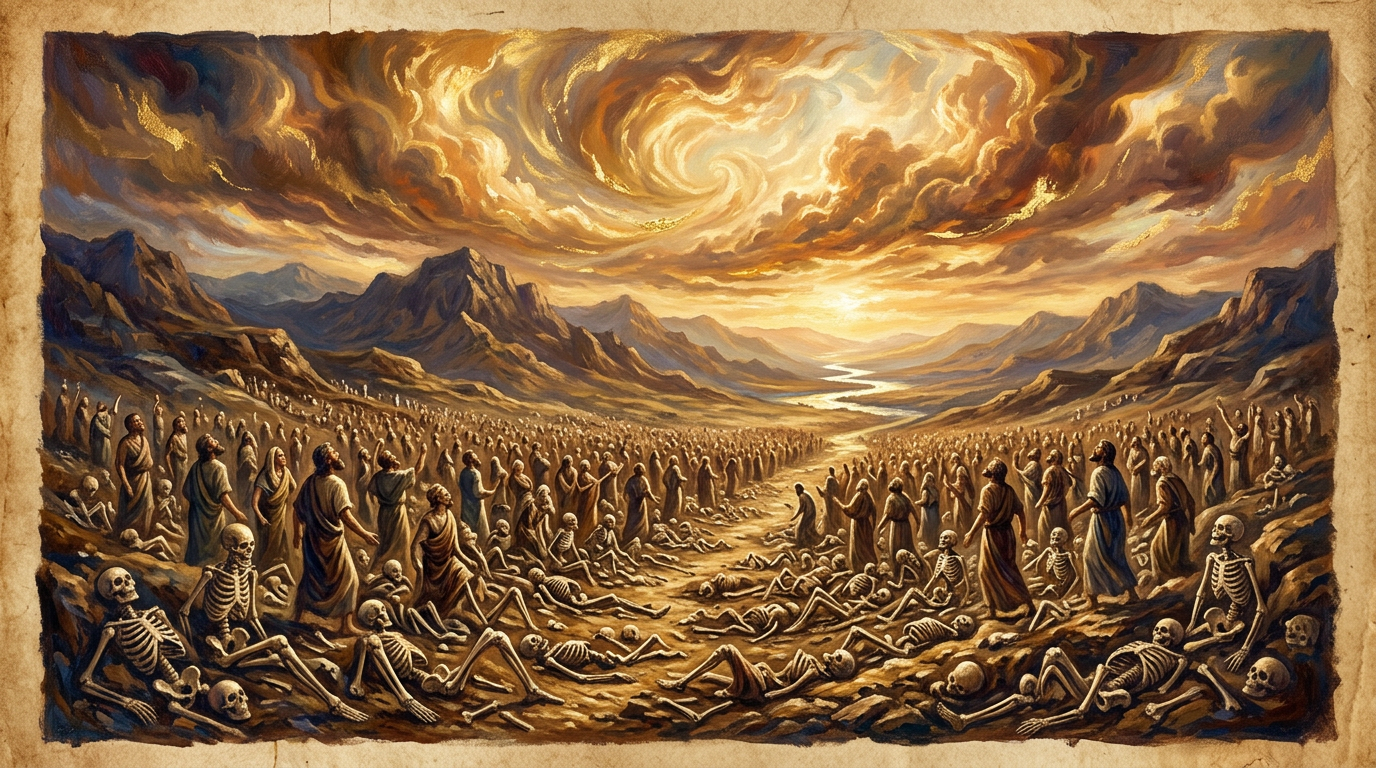
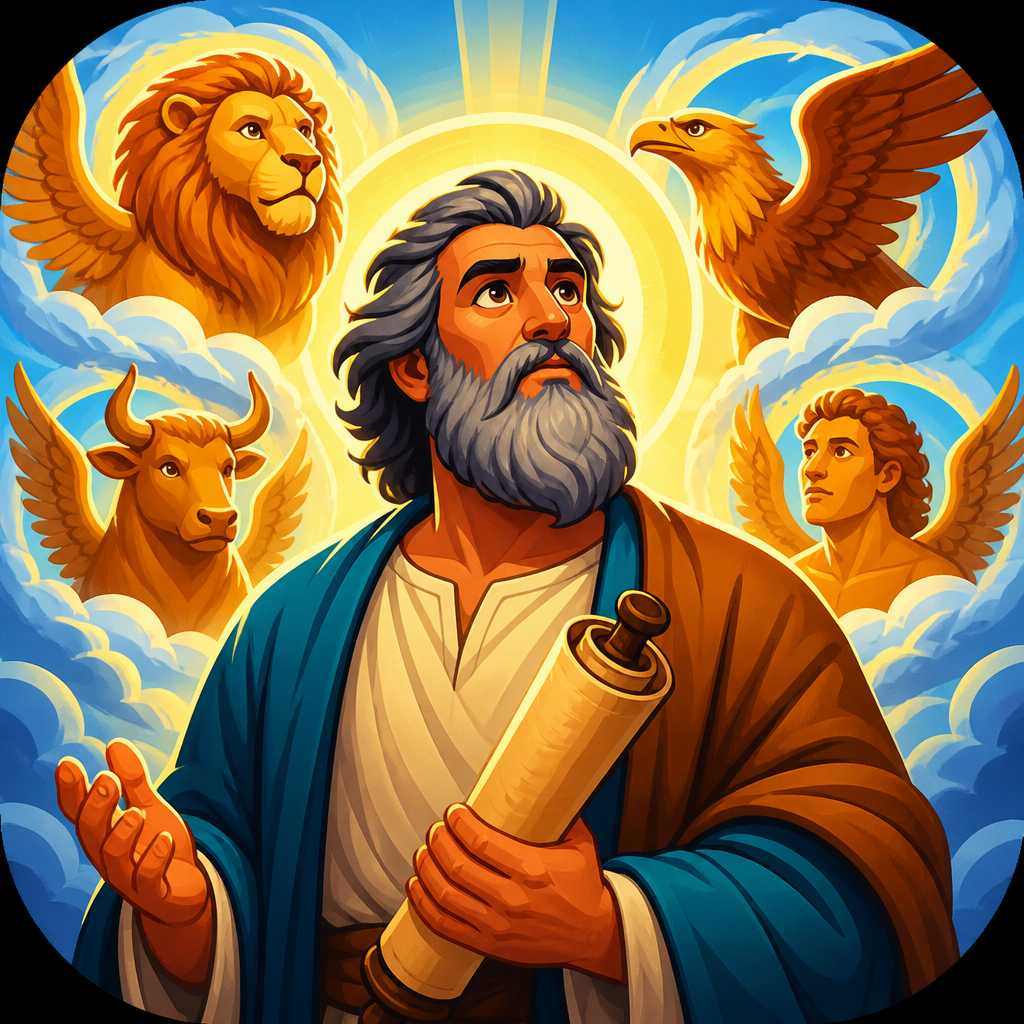
Central to Ezekiel's narrative are several iconic episodes that define his prophetic experience. The book opens in Chapter 1 with the 'Vision of the Chariot,' where Ezekiel sees four living creatures and wheels within wheels, signifying God’s omnipresence and mobility even outside Jerusalem. Another pivotal moment occurs in Chapter 10, where the prophet witnesses the heartbreaking departure of God’s glory from the defiled Temple. However, the tone shifts from judgment to hope in the famous account of the Valley of Dry Bones in Chapter 37. Here, Ezekiel is commanded to prophesy to a landscape of skeletal remains, which miraculously come to life, symbolizing the national resurrection of Israel. The latter part of the book, specifically Chapters 40 through 48, provides an exhaustive blueprint for a future Temple and the division of the land among the tribes. Throughout these stories, the theme of individual responsibility is paramount, as seen in Chapter 18, where God declares that each person is accountable for their own righteousness. The book concludes with the naming of the city 'Jehovah Shammah,' meaning 'The Lord is there,' signifying the permanent dwelling of God with His sanctified people.
Questions People Ask About Ezekiel
Who wrote the book of Ezekiel?
The book is attributed to Ezekiel, the son of Buzi, a captive priest living in Babylon. Internal evidence strongly supports his authorship, as the book is written primarily in the first person and maintains a consistent, highly structured literary style. Ezekiel’s priestly background is evident in his deep concern for the Temple, ritual purity, and the intricate details of sacrificial law, all of which are woven throughout his prophetic messages during the Babylonian exile.
What does the vision of the dry bones mean?
Found in Ezekiel 37, the vision of the dry bones represents the spiritual and national restoration of the house of Israel. At the time, the exiled Israelites felt their hope was lost and they were 'cut off.' God used the imagery of bones coming to life to prove that He had the power to bring the people back to their own land and put His Spirit within them, transforming a dead nation into an exceeding great army.
What are the four faces in Ezekiel 1?
In Ezekiel 1:10, the prophet describes four living creatures, each having four faces: the face of a man, a lion, an ox, and an eagle. Historically, Christian tradition has often associated these four faces with the four Gospels or different aspects of Christ's character, though in the immediate context of Ezekiel, they represent the majesty, strength, service, and swiftness of God’s created order and His sovereign dominion over all the earth.
Why did Ezekiel perform symbolic acts?
God commanded Ezekiel to perform 'sign acts' to vividly illustrate coming judgments when words alone were not enough. For example, he sketched Jerusalem on a brick (Chapter 4) and lay on his side for hundreds of days to bear the iniquity of the people. These dramatic performances served as visual parables to grab the attention of the rebellious exiles and emphasize the gravity of the sins that led to their captivity.
Where was the River Chebar located?
The River Chebar was actually a large irrigation canal in ancient Babylonia, branching off from the Euphrates river near the city of Nippur. It was in this region, at a place called Tel-abib, where Ezekiel lived among the Jewish exiles. It was by this watercourse that he received his inaugural vision of the heavens opening and the likeness of the glory of the Lord appearing in a whirlwind.
Words to Look For in This Puzzle
A curated list of names, places, and themes from Ezekiel.
Verses to Reflect On
“A new heart also will I give you, and a new spirit will I put within you: and I will take away the stony heart out of your flesh, and I will give you an heart of flesh.”
“Again he said unto me, Prophesy upon these bones, and say unto them, O ye dry bones, hear the word of the LORD.”
“For thus saith the Lord GOD; Behold, I, even I, will both search my sheep, and seek them out.”
As you search for these significant names and themes within our Ezekiel word search, take a moment to reflect on the incredible persistence of God's grace. Ezekiel's journey was one of profound hardship and heavy responsibility, yet he never lost sight of the majestic holiness of the Almighty. The words you find today represent a history of resilience and a promise of spiritual renewal that still speaks to us in the modern world. Whether you are a student of prophecy or simply enjoy the peaceful challenge of a puzzle, may this activity bring you closer to the powerful truths found in the book of Ezekiel. We hope this word search inspires you to open your Bible and see these visions for yourself.
Frequently Asked Questions
Is this Ezekiel word search free to use?
Yes, our Bible word search puzzles are completely free for personal and educational use. We believe in providing accessible ways for families and church groups to engage with the book of Ezekiel through interactive and fun learning tools.
Can I print the Ezekiel puzzle for my Sunday school class?
Absolutely! Our puzzles are designed to be printer-friendly, making them perfect for Sunday school, Bible study groups, or homeschooling lessons focused on the Major Prophets and the history of the Babylonian exile.
What age group is this Ezekiel puzzle intended for?
While the book of Ezekiel contains complex themes, this word search is suitable for all ages. Children will enjoy the challenge of finding words, while adults will appreciate the deep theological significance behind each term included in the grid.
Where can I read the full book of Ezekiel online?
The book of Ezekiel is available on many free Bible websites such as BibleGateway or Blue Letter Bible. Reading the scripture alongside this puzzle will help you see the context of words like 'Chebar,' 'Cherubim,' and 'Watchman' in their original setting.
More Bible puzzles
Puzzle powered by WordSearch.Life