Job Word Search
Explore the Book of Job through our Bible word search. Dive into ancient wisdom, the mystery of suffering, and Job's unwavering faith in this rich study.

Finding peace in the midst of life's greatest trials is a journey every soul must eventually take, and the Book of Job serves as a profound guide for such moments. This word search puzzle invites you to slow down and reflect on one of the most intellectually and spiritually challenging books in the entire Bible. As you scan the grid for names like Eliphaz and terms like Leviathan, you are doing more than just playing a game; you are engaging with an ancient dialogue about justice, sovereignty, and the resilience of the human spirit. Job reminds us that even when the world feels chaotic, there is a grander design at work. Allow this puzzle to be a quiet space for contemplation as you rediscover the timeless lessons hidden within these sacred verses.
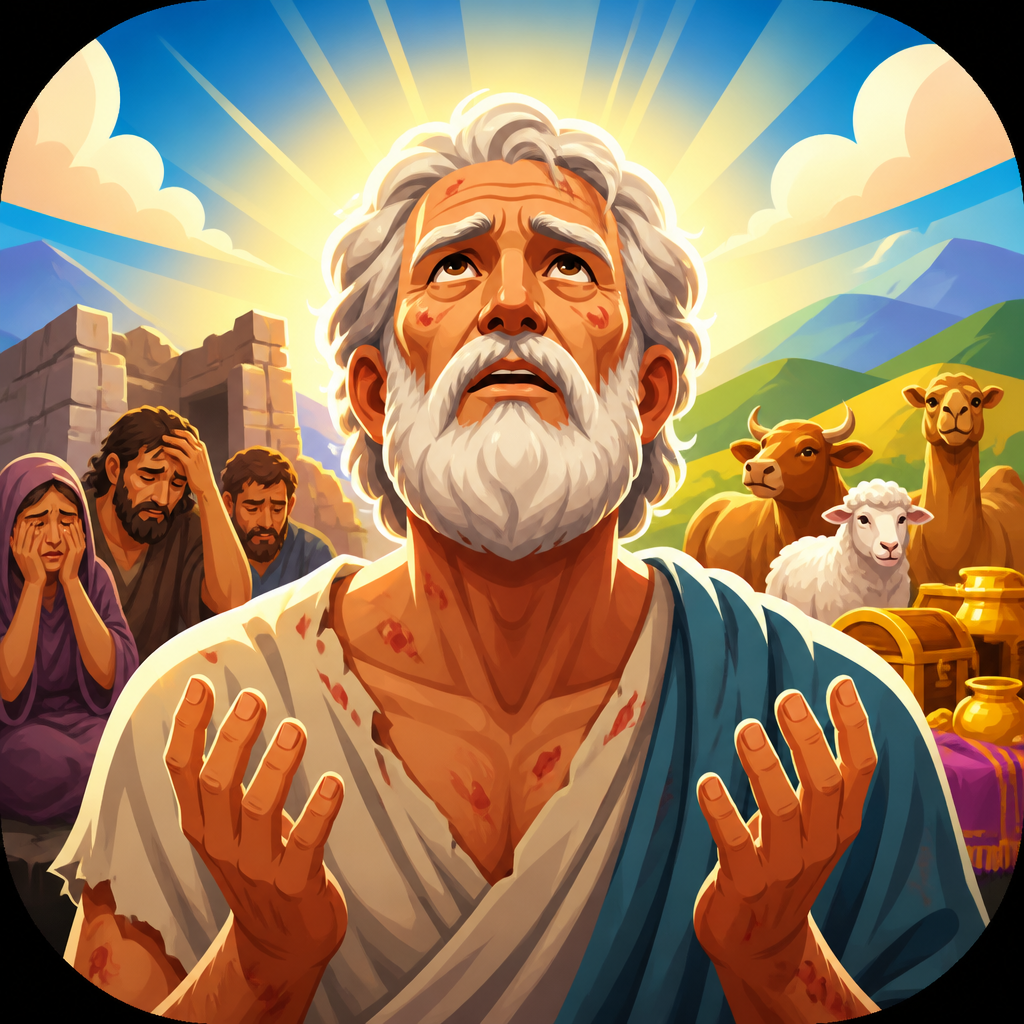
An Introduction to the Wisdom of Job
The Book of Job is widely regarded as a masterpiece of world literature and stands as a pillar of the Wisdom Literature in the Old Testament. While the author remains anonymous, many scholars suggest that the events took place during the patriarchal period, perhaps contemporary with Abraham, given Job's role as the priest of his family and his great age. The setting is the land of Uz, a region likely located between Edom and northern Arabia. Structurally, the book is unique, transitioning from a prose prologue into a vast, poetic debate between Job and his three friends—Eliphaz, Bildad, and Zophar. It concludes with a breathtaking divine monologue and a prose epilogue. Unlike many other biblical books that focus on the national history of Israel, Job addresses the universal human condition, questioning why the righteous suffer. It occupies a central place in the Hagiographa (Writings) of the Hebrew Bible, positioned between Esther and Psalms, offering a stark, honest look at faith under pressure and the incomprehensible majesty of the Creator.
Themes of Sovereignty and Restoration
Central to the narrative is the 'Heavenly Council' in chapters 1 and 2, where the adversary challenges Job's integrity before God, setting the stage for his immense losses. The book explores the 'Retribution Principle'—the idea that the good always prosper and the wicked always suffer—a concept Job’s friends lean on heavily, yet the text ultimately deconstructs. In chapters 38 through 41, God answers Job not with explanations, but with a series of questions about the natural world, citing the Behemoth and the Leviathan to illustrate human limitation compared to divine power. This shifts the theme from a search for 'why' to a realization of 'Who.' The story culminates in Job’s intercession for his friends and his subsequent restoration in chapter 42, where his fortunes are doubled. These themes emphasize that true wisdom begins with the fear of the Lord and the humility to trust His character even when His ways are hidden from our sight.
Questions People Ask About Job
who wrote the book of job in the bible
The authorship of the Book of Job is not explicitly stated within the text itself. Jewish tradition often attributes the work to Moses, suggesting he learned of Job's story during his time in Midian. Other scholars propose that a later wisdom writer, perhaps in the era of Solomon, compiled the ancient accounts into the poetic masterpiece we have today. Regardless of the human scribe, the book is accepted as divinely inspired scripture that accurately reflects the historical reality of Job's life in the land of Uz.
what is the main message of the book of job
The main message of Job is that human wisdom is insufficient to fully grasp the complexities of God's sovereign governance of the universe. While Job's friends wrongly insist that his suffering is a result of hidden sin, the book reveals a cosmic perspective where God's purposes transcend simple cause-and-effect morality. It teaches that faith involves trusting in God's wisdom and justice even when personal circumstances are inexplicable, emphasizing that God is present in our pain even when He is silent.
why did god let satan touch job
According to Job 1 and 2, God allowed the adversary to test Job to demonstrate that Job's righteousness was not merely a reaction to his blessings. The trial served to prove that Job's love for God was genuine and rooted in who God is, rather than what God provides. This divine permission highlights the reality of spiritual warfare and suggests that human suffering can sometimes serve a higher purpose in a cosmic narrative that we cannot fully see from our earthly vantage point.
where was the land of uz in the bible
The exact location of the land of Uz is debated by historians, but most place it to the east of the Jordan River, near the borders of Edom and Arabia. Lamentations 4:21 mentions the 'daughter of Edom, that dwellest in the land of Uz,' supporting a location in the Transjordan region. Its setting outside the land of Israel underscores the universal nature of the book's themes, showing that the knowledge of the one true God was present among various peoples in the ancient Near East.
how does the book of job end for job
The book ends with Job’s complete restoration in chapter 42. After Job repents of his questioning and prays for his friends, the Lord blesses his latter end more than his beginning. He is given fourteen thousand sheep, six thousand camels, a thousand yoke of oxen, and a thousand she asses. He also has seven sons and three daughters, including Jemima, Kezia, and Keren-happuch, eventually living to see four generations of his descendants before dying at the age of 140.
Words to Look For in This Puzzle
A curated list of names, places, and themes from Job.
Verses to Reflect On
“For I know that my redeemer liveth, and that he shall stand at the latter day upon the earth:”
“But he knoweth the way that I take: when he hath tried me, I shall come forth as gold.”
“I know that thou canst do every thing, and that no thought can be withholden from thee.”
As you finish this word search and reflect on the life of Job, may you be encouraged by his steadfastness and God's ultimate compassion. The journey through this book is often difficult, as it mirrors the very real hardships we face in our own lives, but it ends with a reminder of divine sovereignty and grace. Whether you are seeking a moment of peace or a deeper understanding of biblical wisdom, we hope this puzzle has brought the story of Job to life in a new way. Take these words into your heart and remember that even in the whirlwind, you are never truly alone.
Frequently Asked Questions
Is this Job word search suitable for Sunday School?
Yes, this puzzle is an excellent resource for Sunday school classes or youth groups studying the Wisdom Literature. It focuses on the names and key theological terms found in the book, providing a helpful way to familiarize students with the text while remaining engaging for all ages and respectful of the biblical narrative.
Can I print this Bible puzzle for personal use?
Absolutely! You are welcome to print this Job word search for your personal devotionals, family game nights, or small group studies. It is designed to be a portable tool for meditation and learning, allowing you to engage with the scriptures wherever you find yourself.
What age group is the Job puzzle designed for?
The vocabulary in this puzzle is best suited for adults and older children (ages 10 and up) who have a basic familiarity with Bible stories. Because the Book of Job contains some complex names and philosophical concepts, it offers a rewarding challenge for those looking to deepen their biblical literacy.
Where can I read the full story of Job online?
You can read the complete Book of Job in the King James Version for free on various reputable sites like BibleGateway or Blue Letter Bible. Reading the text alongside this puzzle will help you see the context of words like Elihu and Leviathan, enriching your overall study experience.
More Bible puzzles

Puzzle powered by WordSearch.Life