2 Corinthians Word Search
Explore the vulnerability and strength of 2 Corinthians through this Bible word search. Learn about Paul's trials, the thorn in the flesh, and divine grace.
Walking through the letters of the New Testament offers a unique window into the trials and triumphs of the early church. Among these, 2 Corinthians stands out as a deeply personal and emotional letter, revealing the heart of the Apostle Paul as he defends his ministry and expresses his profound affection for the believers in Corinth. This Bible word search puzzle is designed to help you engage more deeply with the text, encouraging you to slow down and notice the specific language of comfort, reconciliation, and strength. As you search for each term hidden in the grid, you are invited to reflect on the resilience required to build a community of faith amidst external pressure and internal struggles, making the ancient words of 2 Corinthians feel remarkably present today.
The Historical Context of 2 Corinthians
Second Corinthians is the eighth book of the New Testament, traditionally attributed to the Apostle Paul and his companion Timothy. Written approximately 55-57 AD, likely from Macedonia, this letter serves as a critical follow-up to earlier correspondence with the church at Corinth. Unlike the more instructional tone of 1 Corinthians, this second canonical letter is intensely autobiographical and defensive. Paul was responding to 'false apostles' who had arrived in Corinth, questioning his authority and criticizing his physical presence and speaking abilities. The letter is structured around three main sections: Paul's explanation of his recent conduct and ministry of reconciliation (Chapters 1-7), a plea for the collection for the impoverished saints in Jerusalem (Chapters 8-9), and a vigorous defense of his apostolic calling against his detractors (Chapters 10-13). It is celebrated by scholars for its rhetorical complexity and its raw, honest look at the suffering inherent in Christian service, bridging the gap between high theology and the gritty reality of first-century ministry.
Key Themes and Stories in 2 Corinthians
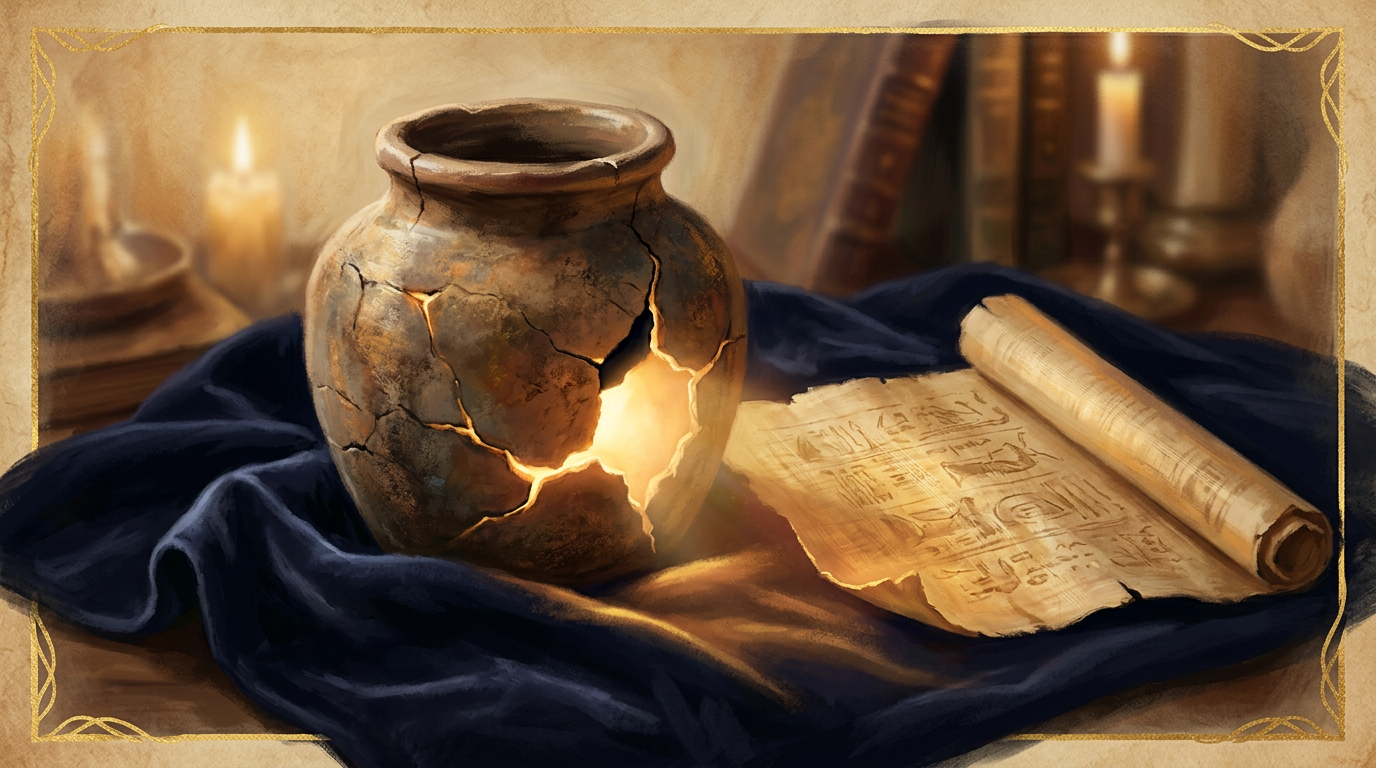
One of the most striking narratives in 2 Corinthians is Paul's account of his 'thorn in the flesh' in Chapter 12, a mysterious physical ailment that he pleaded with God to remove, only to be told that divine grace is sufficient in weakness. This theme of 'strength in weakness' permeates the entire letter. In Chapter 4, Paul uses the vivid imagery of 'treasure in earthen vessels' to describe how the glory of the Gospel is housed in fragile human lives. The book also provides the definitive biblical teaching on generosity in Chapters 8 and 9, highlighting the example of the Macedonian churches who gave out of their deep poverty. Paul introduces the concept of the 'ministry of reconciliation' in Chapter 5, explaining that believers are ambassadors for Christ, tasked with sharing the message that God was in Christ reconciling the world unto himself. Furthermore, the letter offers a rare glimpse into Paul's mystical experiences, including being caught up to the 'third heaven,' balanced against his list of physical persecutions—shipwrecks, beatings, and sleepless nights—which he uses to prove his sincerity and devotion to the Corinthian church.
Questions People Ask About 2 Corinthians
What is the main message of 2 Corinthians?
The central message of 2 Corinthians is that God's power is most clearly demonstrated through human weakness and suffering. Paul emphasizes that the hardships he endures as an apostle are not signs of God's rejection, but rather a way for Christ's life to be manifested. He focuses on the ministry of reconciliation (2 Corinthians 5:18-19) and the importance of a sincere, heart-led devotion to Christ over outward appearances or worldly credentials.
Who wrote 2 Corinthians and why?
The Apostle Paul wrote 2 Corinthians, along with Timothy, to the church in Corinth. His primary purpose was to defend his apostolic authority against rival teachers, express joy over the church's repentance following a 'sorrowful letter,' and to encourage the believers to complete their promised financial contribution for the suffering Christians in Jerusalem. It serves as a deeply personal defense of his integrity and love for the congregation.
What was Paul's thorn in the flesh in 2 Corinthians 12?
In 2 Corinthians 12:7, Paul mentions a 'thorn in the flesh, the messenger of Satan to buffet me.' While he never specifies its exact nature, scholars suggest it could have been a physical ailment, chronic eye problems, or persistent persecution. Regardless of what it was, Paul concludes that God allowed it to remain to keep him humble, teaching him that God's grace is sufficient for every trial.
What does 2 Corinthians say about giving?
2 Corinthians 9:7 provides a foundational principle for Christian giving: 'Every man according as he purposeth in his heart, so let him give; not grudgingly, or of necessity: for God loveth a cheerful giver.' Paul argues that giving should be a voluntary act of worship and gratitude, modeled after the grace of Jesus Christ, who became poor so that believers might become rich (2 Corinthians 8:9).
What is the third heaven mentioned in 2 Corinthians 12?
In 2 Corinthians 12:2, Paul speaks of a man (referring to himself) who was 'caught up to the third heaven.' In the Jewish cosmology of the time, the first heaven was the atmosphere, the second was the starry firmament, and the third heaven was the dwelling place of God. This experience was a profound divine revelation that Paul mentions to show that his authority comes from God, not man.
Words to Look For in This Puzzle
A curated list of names, places, and themes from 2 Corinthians.
Verses to Reflect On
“Therefore if any man be in Christ, he is a new creature: old things are passed away; behold, all things are become new.”
“And he said unto me, My grace is sufficient for thee: for my strength is made perfect in weakness. Most gladly therefore will I rather glory in my infirmities, that the power of Christ may rest upon me.”
“But we have this treasure in earthen vessels, that the excellency of the power may be of God, and not of us.”
As you finish this word search, we hope the profound themes of 2 Corinthians stay with you. Paul's letter reminds us that we do not have to be perfect or powerful by the world's standards to be used by God; in fact, our very fragility can be the place where His grace shines brightest. This puzzle serves as a gentle way to internalize these truths, providing a moment of quiet reflection in your busy day. Whether you are a long-time student of the Bible or new to its pages, may the words of 2 Corinthians encourage you to walk with hope, knowing that you are a new creation in Christ.
Frequently Asked Questions
Is this 2 Corinthians puzzle suitable for a Sunday school class?
Absolutely. The words are selected from the KJV text of 2 Corinthians and focus on positive, theological themes like grace, comfort, and reconciliation, making it a safe and educational resource for students of all ages.
Can I print this Bible word search for personal use?
Yes, this puzzle is designed to be easily playable online. You can use it for your personal quiet time, family devotions, or as a handout for a small group Bible study focusing on the Pauline epistles.
What is the best way to use this puzzle while reading 2 Corinthians?
We recommend reading a chapter of 2 Corinthians first, then finding the related words in the puzzle. This reinforces the vocabulary and helps you remember the key concepts Paul discusses in his letter.
Where can I read the full text of 2 Corinthians online?
The full text of 2 Corinthians in the King James Version is available on many free public domain sites like BibleGateway or Blue Letter Bible, where you can further research the terms found in this puzzle.
More Bible puzzles
Puzzle powered by WordSearch.Life